CBD's sleep data is preliminary
The most-cited CBD sleep study is a 72-patient case series published in The Permanente Journal in 2019. After one month, 66.7% of patients reported improved sleep scores. The effect attenuated over time [1]. Useful as a hypothesis-generator. Less useful as definitive evidence; case series sit near the bottom of the evidence pyramid.
A broader Current Psychiatry Reports review concluded CBD's sleep evidence is mixed and preliminary, with most controlled data coming from anxiety populations rather than primary insomnia [2]. Athlete-specific CBD sleep RCTs are sparse to non-existent.
None of this means CBD doesn't work. It means the evidence isn't yet strong enough to position it as a category-defining sleep intervention.
If you're tested, contamination is the real risk
A 2017 JAMA study of 84 CBD extracts purchased online found roughly 70% inaccurately labeled. Most were under-labeled, some over. THC was detectable in 21% of products, including ones marketed as THC-free [3].
For an athlete subject to in-competition testing, this is the binding constraint. CBD itself is permitted under the WADA Prohibited List. THC is not. A failed test attributed to a contaminated CBD product is still a failed test [4].
Even for athletes who don't get tested, the labeling variance means dose-response is unpredictable. You can't reliably evaluate something that doesn't reliably contain what it claims to contain.
If your livelihood depends on a clean test, the only safe CBD product is the one you didn't take.
Six plants, no cannabinoids, sleep architecture first
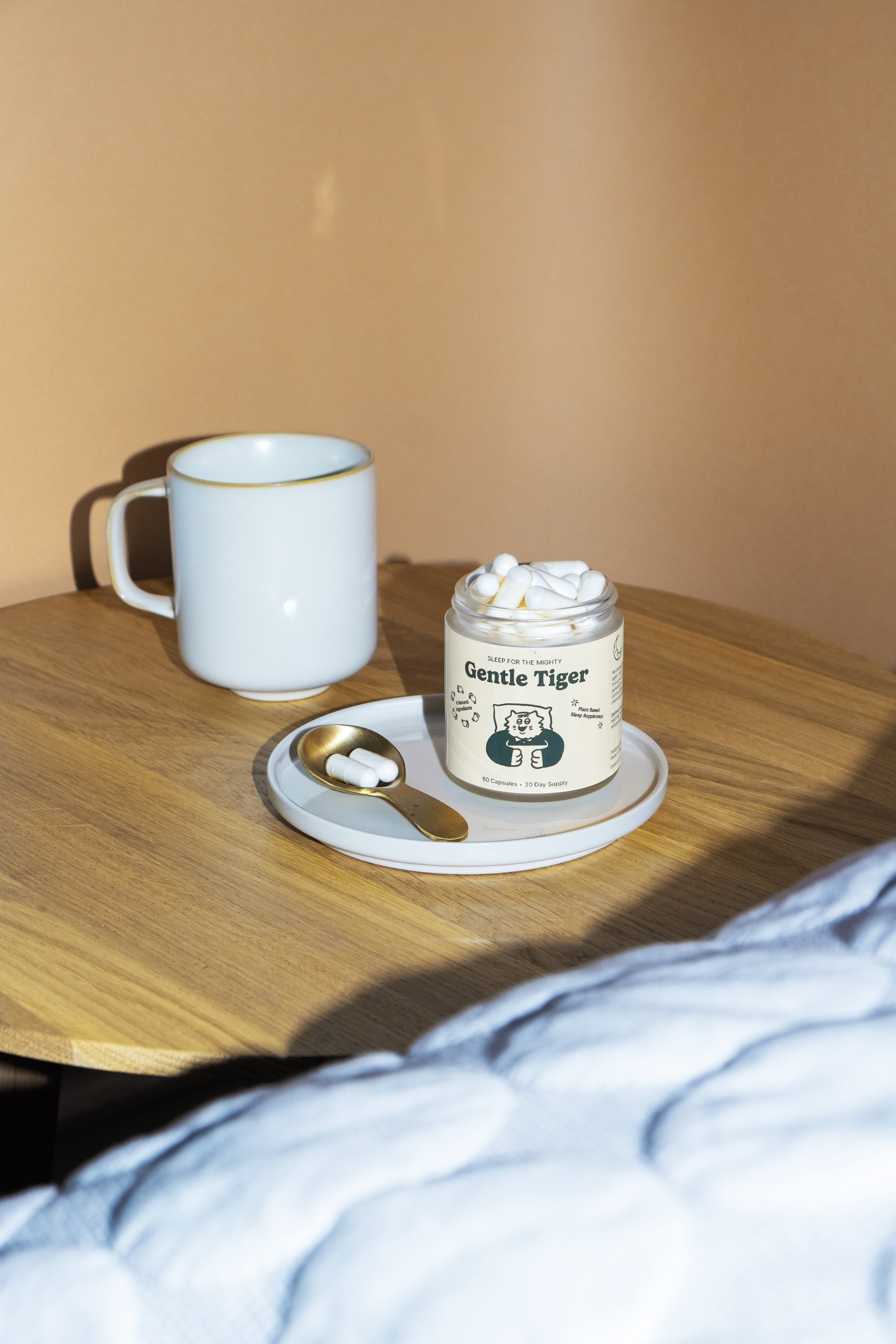
Gentle Tiger is built around a different premise. Sleep recovery is an architecture problem. CBD operates through the endocannabinoid system, with sleep effects downstream of anxiety reduction. The six plants in our formula act directly on the GABAergic and serotonergic systems that govern sleep depth and onset.
Spine date seed and red date promote sleep through GABA-mediated mechanisms. Poria Cocos extends REM and deep sleep duration. Tart cherry contributes natural melatonin precursors at physiologic levels. No cannabinoids. No regulatory ambiguity to navigate.
- No cannabinoids. No CBD, no THC, no third-party contamination risk.
- Six standardized plant extracts manufactured under GMP.
- Mechanisms backed by published peer-reviewed literature.
- Built for nightly use through training and competition cycles.
Common questions
Does CBD actually work for sleep?
The evidence is preliminary. The most-cited study is a 72-patient case series, not an RCT [1]. Most controlled CBD sleep data comes from anxiety populations rather than primary insomnia. CBD probably helps some people, especially those with anxiety-driven sleep issues. The evidence isn't yet strong enough to call it definitive.
Will I fail a drug test if I take CBD?
CBD itself is permitted under the WADA Prohibited List. THC remains prohibited in-competition. The risk is contamination. A 2017 JAMA study found roughly 70% of CBD products mislabeled and 21% contained detectable THC, including ones marketed THC-free [3]. For tested athletes, the safe choice is to avoid the category.
Does Gentle Tiger contain CBD?
No. Gentle Tiger contains six plants: Spine Date Seed, Poria Cocos, Red Date, Magnolia Fruit, Tart Cherry, and Atractylodes. There are no cannabinoids in the formula.
Can I take CBD and Gentle Tiger together?
We recommend not combining sleep aids with overlapping or unclear pharmacology. If you're using CBD specifically for daytime anxiety and Gentle Tiger for nightly sleep, the timing separation may be acceptable. Consult your physician, especially if you're on prescription medication.
Peer-reviewed sources
Every claim on this page is backed by a PubMed-indexed study.
- [1]Shannon S, Lewis N, Lee H, Hughes S (2019). “Cannabidiol in Anxiety and Sleep: A Large Case Series.” The Permanente Journal · PMID: 30624194
- [2]Babson KA, Sottile J, Morabito D (2017). “Cannabis, Cannabinoids, and Sleep: a Review of the Literature.” Current Psychiatry Reports · PMID: 28349316
- [3]Bonn-Miller MO, Loflin MJE, Thomas BF, Marcu JP, Hyke T, Vandrey R (2017). “Labeling Accuracy of Cannabidiol Extracts Sold Online.” JAMA · PMID: 29114823
- [4]Lachenmeier DW, Habel S, Fischer B, et al. (2019). “Are adverse effects of cannabidiol (CBD) products caused by tetrahydrocannabinol (THC) contamination?.” F1000Research · PMID: 31824672
Trade your melatonin for six plants
Why supraphysiologic melatonin is the wrong tool for nightly recovery sleep.
Read →Plants that work, not plants that trend
How a six-plant formula compares to whatever the wellness shelf is selling this year.
Read →Sleep through training blocks
What the IOC consensus statement says about athlete sleep, and how to protect it.
Read →Stop dragging through morning training
Sleep gentle tonight. Train with a roar tomorrow.
Recovery Capsules
$44.0060 capsules · 30-day supply · 2 per night